
The Ultimate Guide to Boosting Workplace Productivity with Tech in 2026
The Ultimate Guide to Boosting Workplace Productivity with Tech in 2026
The average employee loses nearly 2 hours per day to distractions, inefficient processes, and poor communication. In 2026, the gap between productive organizations and those struggling to keep up is wider than ever. The difference? Strategic investment in the right business technology and workplace productivity solutions.
Technology isn't just about having fancy tools—it's about selecting and implementing solutions that directly impact your bottom line. Companies that invest in workplace productivity improvements see a 40% increase in revenue per employee and significantly higher employee retention rates.
Whether you're managing a remote team, a hybrid workforce, or an in-office operation, this comprehensive guide reveals how modern productivity tools can transform your organization's efficiency and teamwork. Let's explore the strategies that forward-thinking companies are using in 2026 to maximize performance.
The 2026 Workplace Productivity Challenge

Before diving into solutions, it's important to understand the current landscape. The modern workplace faces unique challenges:
Current Workplace Obstacles:
Tool overload: Employees navigate 9+ different applications daily, leading to switching costs and context loss
Communication silos: Information scattered across email, chat, and project management platforms
Meeting fatigue: Unproductive meetings consume 15-20% of employee time
Remote/hybrid complexity: Coordinating teams across multiple locations and time zones
Manual processes: Repetitive tasks that could be automated still consume significant time
Lack of visibility: Management struggles to understand real-time project status and productivity metrics
The good news? Modern business technology solutions are specifically designed to address these challenges. Let's explore how.
1. Unified Communication and Collaboration Platforms
One of the biggest productivity drains is having communication fragmented across multiple channels. Employees waste time searching for information and repeating themselves across different platforms.
The Solution: Integrated Communication Tools
Modern communication platforms consolidate instant messaging, video conferencing, file sharing, and project discussions into a single workspace.
How This Boosts Productivity:
Reduced context switching: Teams spend less time jumping between applications
Faster decision-making: Real-time collaboration enables quick approvals and feedback
Better knowledge retention: Searchable conversation history creates a company knowledge base
Inclusive communication: Asynchronous messaging options accommodate different work schedules and locations
Real-World Impact:
Organizations implementing unified communication platforms report:
35% reduction in email volume
25% improvement in project delivery speed
40% faster cross-departmental collaboration
20% increase in employee satisfaction with internal communication
Key Features to Look For:
Video conferencing with screen sharing capabilities
Persistent team channels for different projects or departments
Integrated file storage and document collaboration
Integration with existing business tools (CRM, project management, etc.)
Mobile accessibility for remote and field workers
Searchable message history for knowledge management
2. Project Management and Task Automation
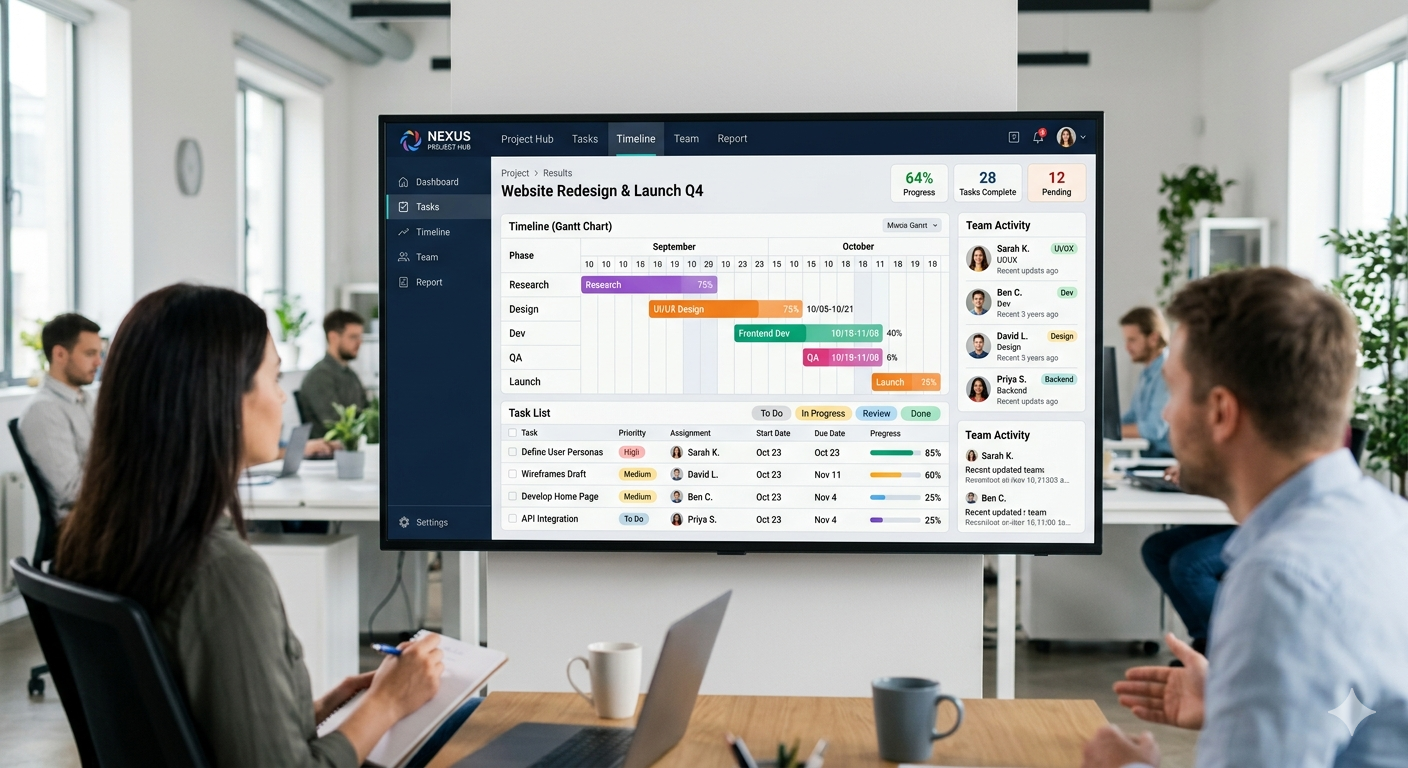
Even the best teams struggle when project tracking is unclear. Spreadsheets and email chains create bottlenecks, and critical tasks fall through the cracks.
The Solution: Modern Project Management Platforms
Contemporary project management software provides visibility into every task, deadline, and team member's workload.
Productivity Gains:
Clear ownership: Every task has an assigned owner with clear deadlines
Reduced micromanagement: Leaders can see progress without constant check-ins
Automated workflows: Repetitive processes execute automatically, freeing time for creative work
Bottleneck identification: Visual tools quickly reveal where projects are stalling
Real-World Example:
A 50-person software company implemented advanced project management tools and saw:
30% faster project completion
40% reduction in missed deadlines
25% improvement in team utilization rates
Better resource allocation across multiple projects
Essential Project Management Features:
Customizable workflows and automation rules
Timeline and Gantt chart visualization
Resource allocation and capacity planning
Dependency management to prevent bottlenecks
Time tracking and productivity metrics
Integration with communication platforms
Mobile apps for on-the-go updates
3. Intelligent Automation and Workflow Optimization
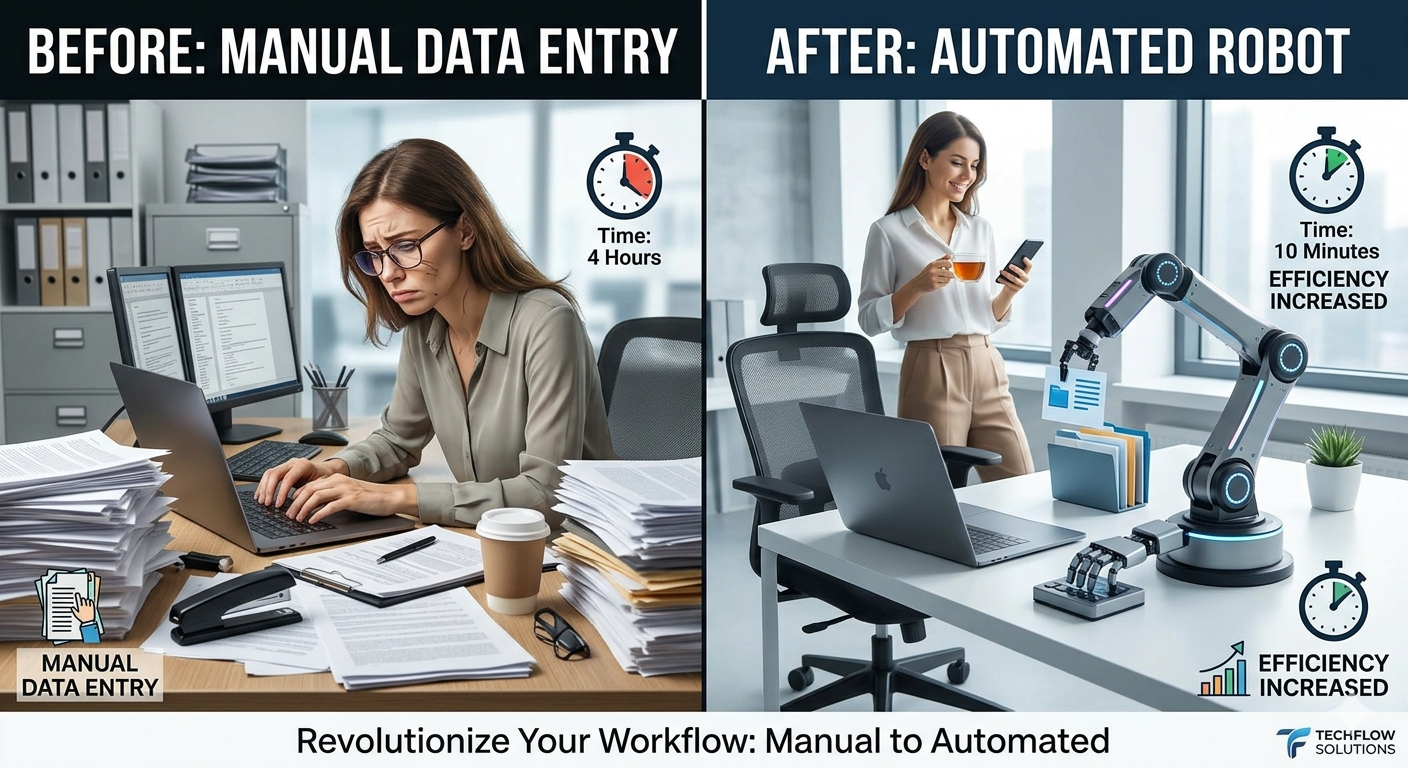
Automation is no longer a luxury—it's essential for workplace productivity in 2026. Repetitive, manual tasks consume an enormous amount of employee time while adding minimal value.
The Solution: Intelligent Automation Tools
RPA (Robotic Process Automation) and workflow automation tools handle repetitive tasks with 100% accuracy, freeing employees for higher-value work.
Tasks Ripe for Automation:
Data entry and transfer between systems
Invoice and expense processing
Customer onboarding workflows
Report generation and distribution
Document approval chains
Scheduling and calendar management
Lead qualification and distribution
Account provisioning and deprovisioning
Productivity Impact:
Businesses automating routine processes experience:
50-70% time savings on automated tasks
99.5% accuracy improvement over manual processes
25-35% reduction in operational costs
40% improvement in employee satisfaction (fewer tedious tasks)
Real-World Example:
A financial services company automated their expense report processing:
Manual processing: 45 minutes per report
Automated processing: 2 minutes per report
Annual savings: 200+ hours of employee time
Faster reimbursement: Employees paid within 24 hours instead of 5-7 days
4. Data-Driven Employee and Productivity Analytics
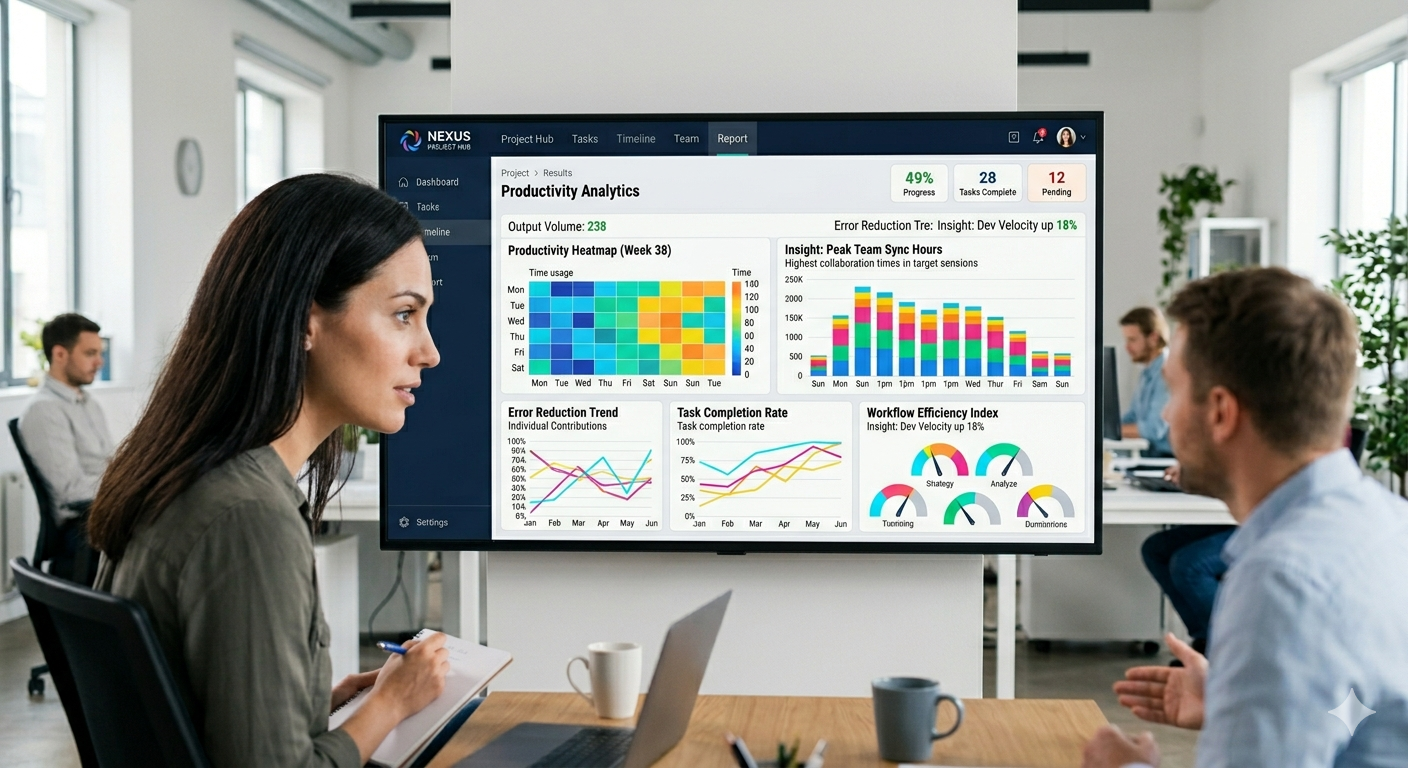
You can't improve what you don't measure. Advanced analytics provide insights into where time is spent and where efficiency can be gained.
The Solution: Workplace Analytics and Business Intelligence
Modern analytics platforms track productivity metrics without invading privacy, offering insights into:
Key Metrics to Monitor:
Task completion rates and time allocation
Meeting effectiveness and attendance patterns
Project timeline adherence
Cross-team collaboration patterns
Peak productivity hours and optimal scheduling
Skills utilization and employee development opportunities
Bottleneck identification and root cause analysis
Productivity Improvements:
Organizations using workplace analytics report:
20-30% improvement in project forecasting accuracy
25% reduction in unproductive meetings
35% better resource allocation
Improved manager decision-making
Early identification of team burnout
How Analytics Drive Decisions:
Workload balancing: Identify overloaded employees and redistribute work
Meeting optimization: Data shows which meetings are essential and which waste time
Schedule optimization: Determine best times for collaboration vs. focused work
Skills matching: Ensure employees work on projects that leverage their strengths
5. Advanced HR and Talent Management Technology

Employee productivity is directly linked to engagement, development, and clear expectations. Modern HR technology ensures talented people stay motivated and develop their skills.
The Solution: Integrated HR and Talent Platforms
Modern HRIS and talent management systems streamline everything from hiring to performance management to career development.
Productivity-Enhancing HR Functions:
Streamlined hiring: Faster recruitment means teams get support sooner
Onboarding automation: New employees become productive faster
Performance management: Clear goals and regular feedback improve output
Learning and development: Skill development increases employee capability
Succession planning: Better talent retention reduces productivity disruptions
Real-World Impact:
Companies implementing integrated talent platforms see:
25% faster time-to-hire
40% improvement in new employee ramp-up time
35% increase in internal promotion rates
20% improvement in employee retention
Higher overall employee engagement and productivity
Key HR Technology Features:
Applicant tracking system (ATS) for streamlined hiring
Automated onboarding workflows
Performance management and goal tracking
Learning management system (LMS)
Pulse surveys for real-time engagement feedback
Succession planning and career path visualization
Compensation and benefits administration
Implementing Tech Solutions for Maximum Impact
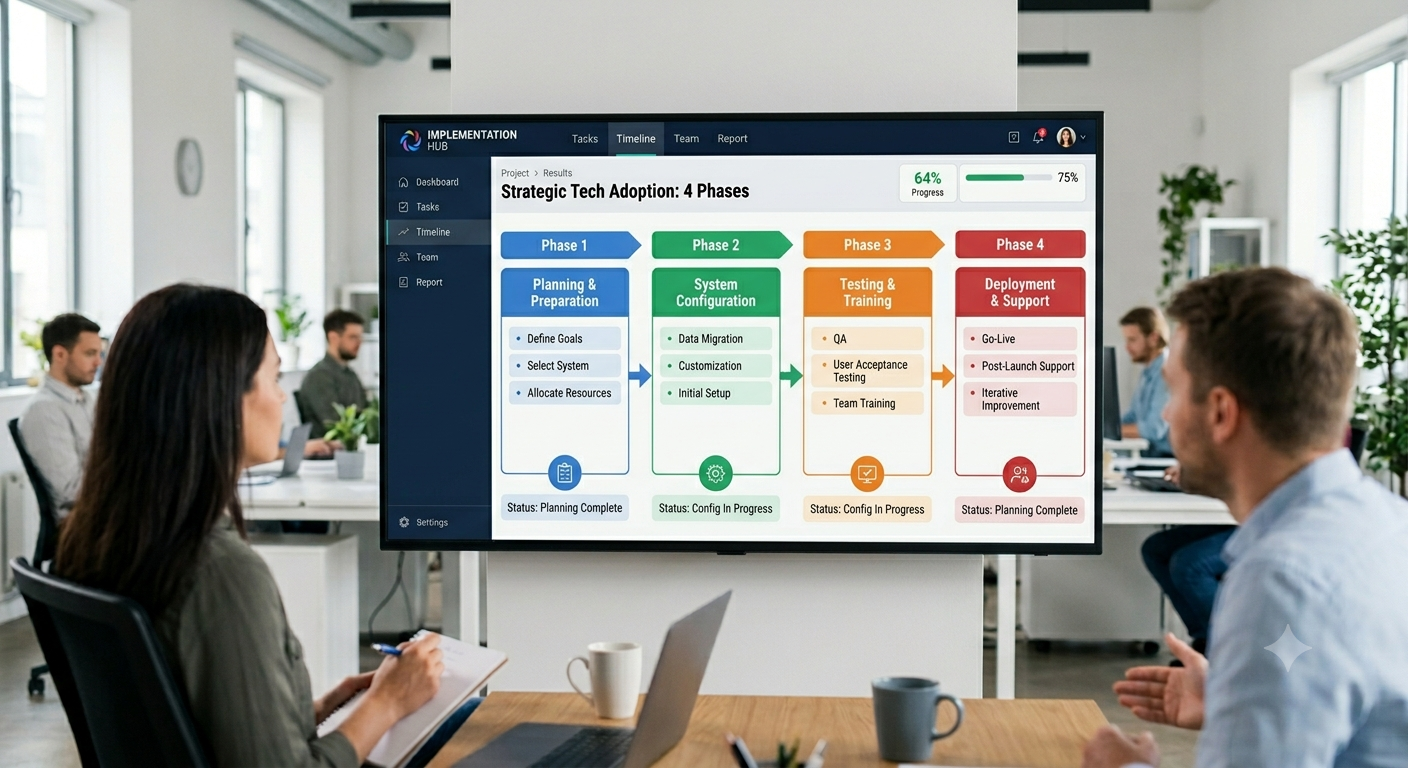
Adding technology randomly won't solve productivity problems. Strategic implementation is critical.
Phase 1: Assess Current State
Conduct productivity audit: Where is time actually spent?
Identify pain points: Which processes are most inefficient?
Understand employee feedback: What tools do teams request?
Benchmark against industry standards: How do you compare?
Define success metrics: What does improved productivity look like?
Phase 2: Plan Strategic Implementation
Prioritize solutions: Tackle the biggest pain points first
Build business case: Calculate ROI for each investment
Plan change management: Technology only works if adopted
Secure stakeholder buy-in: Leaders and employees must support change
Set realistic timelines: Gradual implementation is more sustainable
Phase 3: Execute and Optimize
Invest in training: Adoption is critical for ROI
Create champions: Identify power users who can mentor others
Gather feedback: Continuously improve based on user experience
Monitor metrics: Track whether productivity actually improved
Iterate and refine: Optimize configurations based on results
Phase 4: Scale and Sustain
Expand to other departments: Apply learnings from initial rollout
Continuously improve: Stay updated with new features and capabilities
Maintain user adoption: Refresher training and new employee onboarding
Review and upgrade: Annually assess whether solutions still meet needs
Share best practices: Document and communicate what's working
Common Mistakes to Avoid
Learning from others' mistakes can save you time and money:
Mistake #1: Technology for Technology's Sake
The Problem: Adopting trendy tools without clear business justification.
The Solution: Every tool should solve a specific, identified productivity problem.
Mistake #2: Insufficient Change Management
The Problem: Great technology fails if employees don't adopt it.
The Solution: Invest 30-40% of the project budget in training and change management.
Mistake #3: Tool Proliferation
The Problem: Organizations end up with 15+ disconnected tools, creating more problems than solutions.
The Solution: Consolidate where possible; prioritize integration where it's not.
Mistake #4: Ignoring User Feedback
The Problem: IT departments choose tools without consulting users who'll depend on them.
The Solution: Include diverse employees in tool evaluation and selection.
Mistake #5: Neglecting Integration
The Problem: New tools don't talk to existing systems, creating duplicate data entry.
The Solution: Make integration a non-negotiable requirement in your selection criteria.
Mistake #6: No Measurement Plan
The Problem: Organizations can't demonstrate whether investments actually improved productivity.
The Solution: Establish baseline metrics and track progress from day one.
Transform Your Workplace with KD Squares Business Optimization Solutions

Implementing workplace productivity technology is complex. You need a partner who understands both technology and your unique business challenges.
KD Squares specializes in helping organizations like yours identify, implement, and optimize business technology solutions that deliver measurable productivity improvements.
Why Choose KD Squares?
Expert Assessment
Comprehensive productivity audit to identify your specific challenges
Benchmark analysis against industry standards
Clear recommendations tailored to your organization
Strategic Implementation
Vendor selection guidance and negotiation support
Customized implementation roadmaps
Integration planning to maximize tool effectiveness
Change Management
Employee training and adoption programs
Leadership coaching for technology-driven management
Communication strategies for smooth transitions
Ongoing Optimization
Metrics tracking and reporting
Quarterly business reviews
Continuous optimization recommendations
Our Approach
Understand Your Business: We don't recommend generic solutions. We study your workflows, challenges, and goals.
Assess Current State: Through interviews, observations, and data analysis, we identify productivity bottlenecks and opportunities.
Design Solutions: Based on our assessment, we recommend specific tools and implementations tailored to your needs.
Enable Adoption: Technology only works if adopted. We provide comprehensive change management and training.
Measure Results: We establish metrics and track them quarterly, ensuring you're achieving expected ROI.
Optimize Continuously: We provide ongoing recommendations to help you maximize technology investment.
Ready to Boost Your Workplace Productivity?
In 2026, workplace productivity technology is not optional—it's essential for competitiveness. Yet without expert guidance, choosing and implementing the right solutions is overwhelming.
KD Squares is ready to help you unlock the full potential of your team.
Schedule Your Complimentary Consultation
During a 30-minute consultation with a KD Squares productivity expert, we'll:
Discuss your current productivity challenges
Identify where technology can have the biggest impact
Answer your questions about implementation
Outline next steps for your organization
Get Started Today
Schedule Your Free Consultation with KD Squares
