Custom Systems Integration for Business Efficiency
Business Operations, Systems Integration, KD Squares
How Custom Systems Integration Fixes Broken Business Workflows
When your business was smaller, adding a new app for every problem felt smart. Need a CRM? Add one. Need invoicing? Add another. Need project tracking? Add a third. But over time, that stack of tools quietly turns into a maze of manual work, disconnected data, and frustrated teams. That is where systems integration for SMBs stops being a “nice to have” and becomes mission critical.
What Is App Sprawl, and Why Is It So Dangerous?
App sprawl happens when a business keeps adding new SaaS tools without a clear integration plan. Marketing picks a campaign platform, sales signs up for a CRM, finance runs billing in its own system, and operations lives in a separate project tracker. Each tool might be excellent on its own, but together they form disconnected islands of information.
The danger is not just “too many tools.” It is that these tools don’t talk to each other. Data lives in silos, and your people become the “integration layer,” constantly copying, pasting, and reconciling. Over time, this creates serious risks:
Hidden costs: You pay for overlapping subscriptions and lose hours to manual admin work every week.
Bad decisions: Leaders make calls based on partial or outdated data because no single report is fully accurate.
Customer friction: Slow responses, missed handoffs, and duplicated questions frustrate your best customers.
Scalability limits: As volume grows, manual work becomes a bottleneck that stops you from taking on more business.
For growing companies, ignoring app sprawl is like building a skyscraper on a shaky foundation. It might stand for a while, but every new floor adds risk, complexity, and stress.
Clear Signs Your Systems Aren’t Talking to Each Other
Many leaders sense that something is “off” in their operations but can’t quite name it. If any of these symptoms feel familiar, your business is likely suffering from disconnected software and needs a business systems optimizer approach:
Manual data re-entry everywhere: Your team spends time retyping customer information from web forms into your CRM, from your CRM into your invoicing system, and from invoices into your accounting platform.
Data discrepancies between tools: The revenue report in your CRM doesn’t match what your ERP or accounting software says. Customer status in your support tool doesn’t match their subscription status in your billing system.
Slow response times to customers: Before answering a simple question, your team has to click through four or five different apps to piece together the full story, causing delays and errors.
Reporting takes days, not minutes: Monthly or weekly reports involve exporting CSVs, merging spreadsheets, and manually cleaning data instead of running a single, trusted dashboard.
Onboarding new hires is painful: New team members struggle to understand which system is the “source of truth” for any given question.
💡 Pro Tip: If your team regularly says, “Give me a minute, I just need to pull that from a few places,” it’s time to start connecting disconnected software with a deliberate integration strategy.
API-First Thinking: The Backbone of Modern Systems Integration
Modern SaaS tools are built with APIs structured ways for different systems to exchange data securely. An API-first mindset means you don’t just ask, “What can this app do for my team?” You also ask, “How will this app share data with the rest of our stack?”
With the right custom API integration consulting, your core platforms can function as a single nervous system, even if they come from different vendors. For example:
CRMs: Automatically create or update CRM records when someone fills out a form, completes a purchase, or renews a contract. Sales always sees the latest customer activity without manual updates.
ERPs and accounting systems: Sync invoices, payments, and subscription changes in real time so finance and operations work from the same numbers as sales and customer success.
Payment gateways: When a payment succeeds, fails, or renews, trigger workflows that update customer status, send notifications, and adjust access in your core products or services.
Task and project management systems: Automatically create tasks when deals close, support tickets escalate, or inventory levels drop, ensuring nothing falls through the cracks.
Instead of humans stitching together information, APIs pass data instantly and consistently. For SMBs, this is where systems integration for smbs delivers outsized impact: you get enterprise-grade coordination without needing an enterprise-sized IT department.
From Chaos to Single Source of Truth: The Real-World Impact of Integration
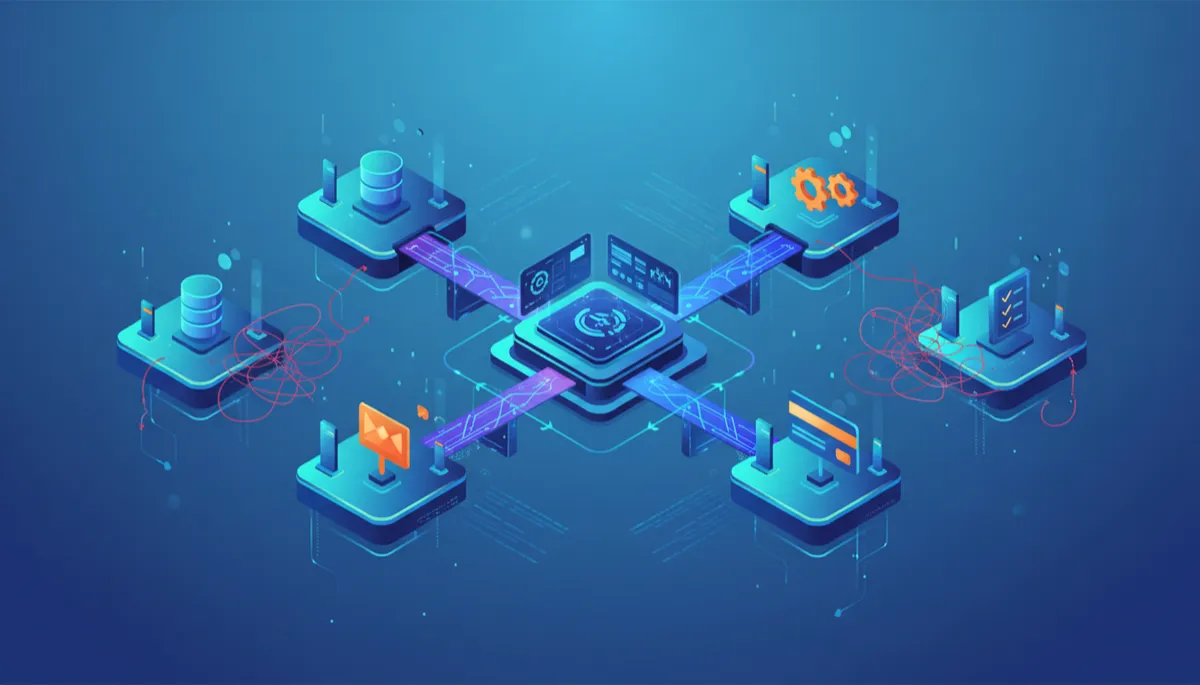
Imagine your current toolset as a cluster of islands: CRM, ERP, payment gateway, helpdesk, project management, and marketing automation all floating separately. Each island is useful, but you need both your team to ferry information back and forth. It’s slow, error-prone, and exhausting.
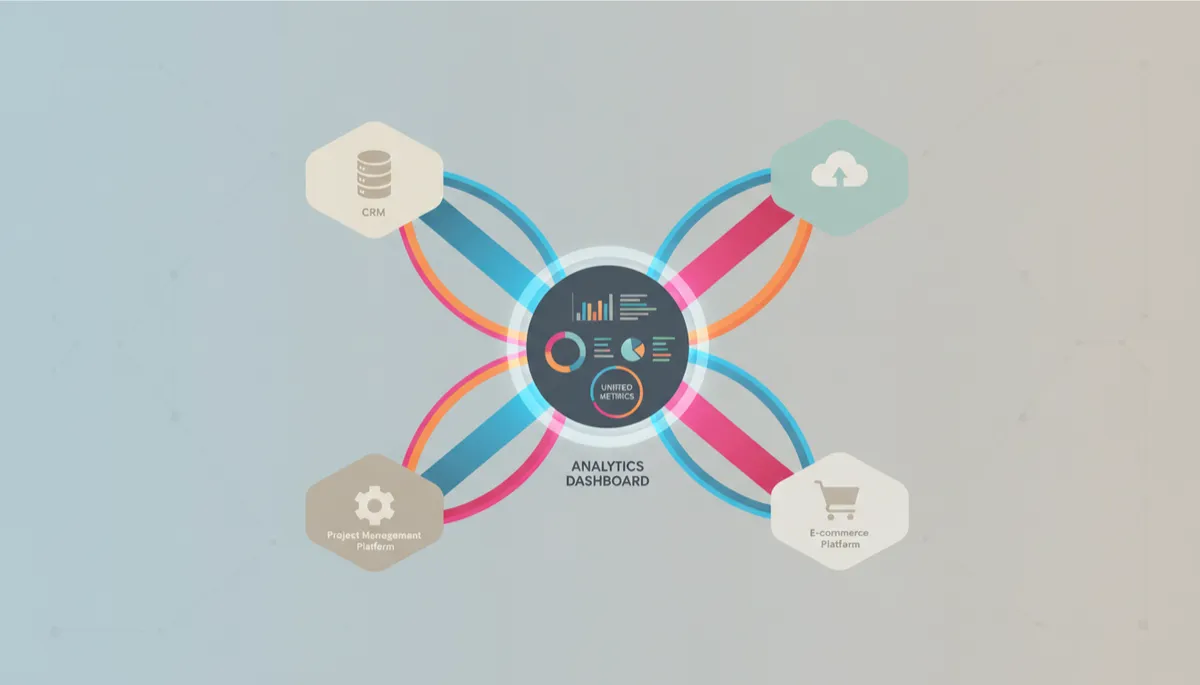
When systems are integrated, leaders make decisions from one accurate, real-time dashboard.
With thoughtful integration, those islands become part of a unified digital hub. Data flows across bridge-like connections into a central place where it can be trusted and acted on. The impact shows up in everyday scenarios:
A sales rep opens a single dashboard and sees a customer’s full history; marketing touchpoints, invoices, support tickets, and project status, without opening five tabs.
Finance runs revenue and churn reports in minutes because billing, CRM, and ERP data are already aligned and de-duplicated in one source of truth.
Operations gets automatic alerts when orders spike or capacity is tight, triggered by real-time signals across your integrated stack.
The result is not just nicer dashboards. It is a fundamentally different way of running your business faster, more accurate, and far less stressful. This is the promise of connecting disconnected software with a clear integration strategy.
How KD Squares Architects Custom Integration Solutions for High-Growth Teams
Off-the-shelf connectors and “no-code zaps” can be useful for simple tasks, but high-growth teams quickly outgrow one-size-fits-all automations. That’s where KD Squares comes in as your business systems optimizer and strategic partner in integration.
KD Squares approaches custom API integration consulting with a structured, business-first methodology:
Discover your workflows and pain points: Before writing a single line of code, KD Squares maps how information should ideally move across your CRM, ERP, payment gateways, support tools, and task systems. The focus is on outcomes; faster sales cycles, smoother billing, better customer experiences.
Audit your existing tools and APIs: The team reviews your current stack, evaluates API capabilities and limits, and identifies where standardized connectors will work and where truly custom integration is required.
Design a robust integration architecture: Instead of a tangle of point-to-point connections, KD Squares often recommends hub-and-spoke or event-driven patterns that keep your data clean, secure, and maintainable as you grow.
Build, test, and harden integrations: Using best practices for authentication, error handling, and logging, KD Squares builds reliable bridges between your systems. Extensive testing ensures data flows correctly under real-world conditions, not just perfect demos.
Roll out dashboards and monitoring: Finally, KD Squares surfaces your newly unified data in clear dashboards and sets up monitoring, so your team is alerted to any issues before they affect customers.
The outcome is not just “more automation.” It’s a tailored integration layer that fits your exact processes, supports your growth trajectory, and can evolve as your strategy changes. For SMBs and scaling teams, this level of systems integration for smbs can be the difference between plateauing and breaking through to the next stage.
Ready to Unify Your Software Stack? Partner with KD Squares
If your team is drowning in logins, spreadsheets, and status checks, you don’t have a people problem, you have an integration problem. The good news is that you don’t need to rip and replace your entire stack to see dramatic improvements. You need a partner skilled at connecting disconnected software into a cohesive, intelligent system.
KD Squares specializes in designing and implementing the custom bridges that turn scattered tools into a unified digital hub. From CRMs and ERPs to payment gateways and task management platforms, we help you build a single source of truth your whole team can rely on, without forcing you into a rigid, off-the-shelf solution.
If you’re ready to explore what a truly integrated stack could look like for your organization, reach out to KD Squares today. Let’s audit your current tools, identify the biggest opportunities, and architect a custom integration roadmap that turns your software from a source of friction into your most powerful competitive advantage.
