
Compete with Big Brands: IT Modernization for SMBs
Business Strategy, Small Business Technology, IT Modernization
How Small Businesses Can Compete with Big Brands Using IT Modernization
Modern technology is no longer a luxury reserved for large enterprises. With smart IT Modernization and thoughtful tech adoption, small businesses can streamline operations, delight customers, and genuinely compete with big brands. This article explores how Digital Transformation can work for smaller organizations, backed by real-world SMB case studies and practical steps you can start today.

Why IT Modernization Matters for Small Businesses
Large brands have scale, budgets, and entire departments dedicated to technology. Yet small businesses have their own powerful advantages: agility, closer customer relationships, and the ability to make decisions quickly. IT Modernization allows small companies to turn those strengths into a competitive edge by using modern tools to automate routine work, gain data-driven insight, and deliver a smoother customer experience.
At its core, Digital Transformation for small business is not about buying every new tool on the market. It is about aligning Small Business Technology with your strategy: choosing cloud-based systems, collaboration platforms, and customer-facing tools that help you serve people better and operate more efficiently. When done well, tech adoption frees your team to focus on higher-value work instead of repetitive manual tasks.
Understanding Tech Adoption for SMBs: Start with the Basics
For many owners, “Digital Transformation” sounds intimidating. In reality, tech adoption for SMBs usually follows a simple progression. You do not need a huge budget or a full-time IT department to begin. You need clarity on what slows your business down and which technologies can remove those bottlenecks first.
Digitize your core operations. Move from spreadsheets and paper to cloud-based tools for accounting, inventory, scheduling, and customer records. This is the foundation of effective IT Modernization.
Connect your systems. Integrate your website, point-of-sale, CRM, and marketing tools so data flows automatically instead of being retyped in multiple places.
Use data to guide decisions. Even basic dashboards can reveal which products are most profitable, which campaigns drive leads, and where you lose customers in the journey.
Automate repeatable tasks. From appointment reminders to follow-up emails and stock alerts, automation lets a small team do the work of many.
💡 Pro Tip: Start with one or two high-impact processes; such as invoicing or customer follow-up, before expanding your Small Business Technology stack.
SMB Case Study #1: Local Retailer Competes with National Chains
Consider a family-owned home décor store facing competition from national chains with massive e-commerce operations. Foot traffic was declining, and the owners felt they could never Compete with Big Brands on price or advertising spend. Instead of trying to outspend them, they invested in targeted IT Modernization.
First, they adopted a cloud-based point-of-sale system that synced inventory across their physical store and a new online shop. Next, they implemented an email marketing platform integrated with their POS, allowing them to segment customers by purchase history and preferences. Finally, they added a simple customer loyalty app, giving shoppers points and personalized offers based on what they actually bought.
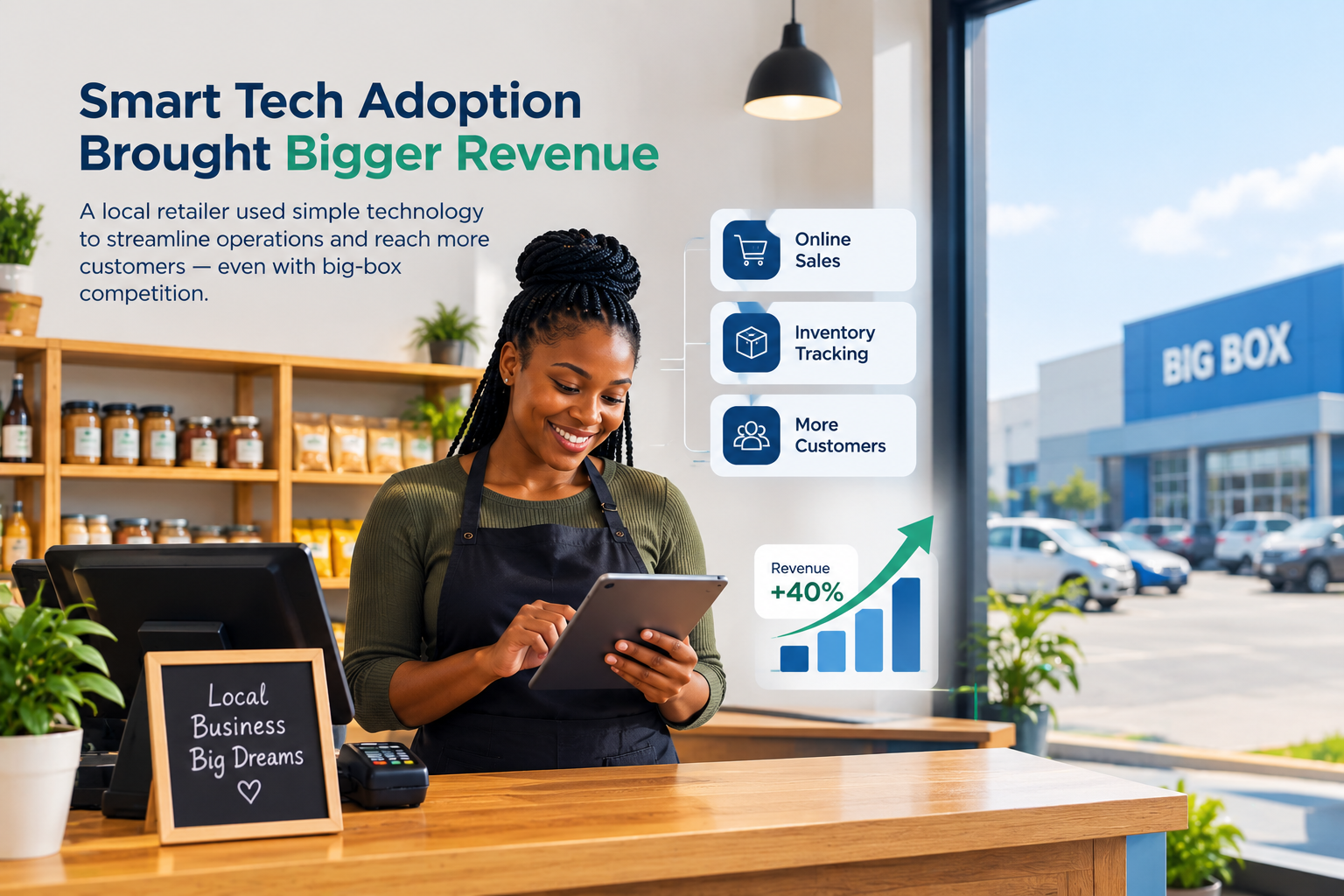
Smart tech adoption helped a local retailer grow revenue despite big-box competition.
Within a year, this small business saw online sales account for nearly 30% of revenue. Repeat purchase rates increased because customers felt recognized and rewarded, not treated like anonymous transactions. This is a classic example of SMB Case Studies where focused Digital Transformation enabled a small retailer to Compete with Big Brands on experience and convenience, without matching their budgets.
SMB Case Study #2: Service Business Scales Without Hiring a Large Team
A small, three-person consulting firm specialized in HR support for local companies. Demand was growing, but the partners were overwhelmed by manual scheduling, proposal creation, and follow-up. They worried that bringing on more staff would erase their profit margins, yet turning away work was not an option if they wanted to grow and compete with larger agencies.
Their IT Modernization journey began with a simple online booking system that synced to their calendars and automatically sent confirmations and reminders. They then created standardized proposal templates in a cloud-based document tool, with electronic signatures built in. Finally, they connected their website forms to a lightweight CRM, triggering automated nurture emails for prospects who were not yet ready to buy.
These Small Business Technology upgrades cut administrative time by more than half. The partners could take on more clients without adding headcount and still deliver a high-touch experience. In competitive pitches, the firm looked just as polished and responsive as bigger agencies, thanks to automated workflows and professional digital touchpoints. Again, this is one of those SMB Case Studies that shows how thoughtful Tech Adoption lets a small firm punch above its weight.
Key Areas of Small Business Technology That Level the Playing Field
Cloud-based collaboration tools. Platforms for file sharing, video meetings, and project management let remote and hybrid teams work like large enterprises, without the overhead of on-premises servers.
Customer relationship management (CRM). Even a basic CRM helps you track leads, manage follow-ups, and personalize communication, core capabilities of any serious attempt to Compete with Big Brands.
Marketing automation. Email sequences, social scheduling, and simple personalization tools ensure your brand stays visible and relevant without requiring a full-time marketing team.
Data and analytics. From website analytics to sales dashboards, data turns guesswork into informed strategy. This is where Digital Transformation begins to pay off in measurable ways.
Cybersecurity basics. As you modernize, protecting customer data and your own systems is essential. Simple measures; multi-factor authentication, secure backups, and regular updates can significantly reduce risk.
Overcoming Common Barriers to Tech Adoption in SMBs
Many small businesses hesitate to modernize because of perceived cost, complexity, or fear of disrupting daily operations. Yet most modern tools are priced on flexible subscriptions, come with built-in support, and can be rolled out gradually. The bigger risk is standing still while competitors embrace IT Modernization and raise customer expectations across your industry.
To reduce risk, treat Digital Transformation as a series of small experiments rather than a single massive project. Pilot a new tool with one team or one location. Measure the impact on time saved, errors reduced, or revenue generated. Use these results as your own internal SMB Case Studies to build confidence and justify further investment in Small Business Technology.
📌 Key Takeaway: The most successful Tech Adoption stories in small businesses are iterative. Start small, learn quickly, and scale what works.
Turning IT Modernization into a Long-Term Competitive Advantage
Technology alone will not guarantee that you Compete with Big Brands successfully. The real advantage comes from how you use those tools to reinforce what makes your business unique: personal service, local expertise, or specialized knowledge. IT Modernization gives you the infrastructure to deliver those strengths consistently, at scale, and with the polish customers expect from larger companies.
Over time, your Digital Transformation efforts should evolve from fixing pain points to enabling new opportunities. That could mean launching online-only product lines, offering subscription services, or expanding into new markets without opening additional physical locations. When technology becomes a natural part of how you operate, your small business stops playing catch-up and starts setting the pace in your niche.
Ready to Compete with Big Brands? Take the Next Step Today
If you recognize your own challenges in these SMB Case Studies, now is the time to act. Your customers are already comparing your service, speed, and convenience to larger competitors. The question is whether your current technology helps you meet those expectations or holds you back.
You do not need a massive budget or an internal IT team to begin. You need a clear roadmap, the right Small Business Technology partners, and a willingness to modernize step by step. Start by identifying one process you can improve with Tech Adoption this quarter and commit to implementing and measuring that change.
Ready to turn IT Modernization into your competitive advantage? Reach out to KD Squares for a tailored Digital Transformation roadmap designed specifically for small and midsize businesses. We will review your current systems, highlight quick wins, and recommend practical tools that fit your budget and goals, so you can Compete with Big Brands on your own terms.
