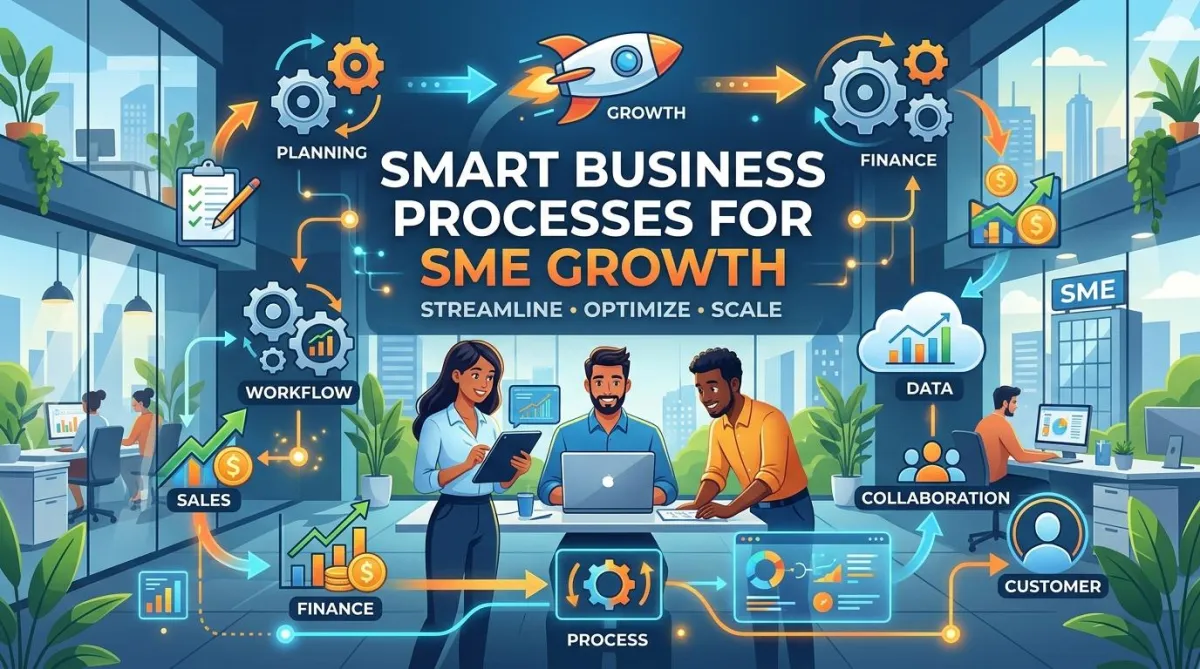
Automate 7 Key Business Processes in 2026
Business Automation, SME Automation, Workflow Optimization
Top 7 Business Processes You Can Automate in 2026 to Save Time and Money
In 2026, business process automation is no longer a luxury reserved for large enterprises. Thanks to intuitive, low-code tools and embedded AI, small and mid-sized enterprises (SMEs) can now automate everyday workflows, streamline operations, and dramatically reduce costs without hiring an IT army. This practical guide walks you through seven high impact processes you can automate right now to save time and money while positioning your business for the latest automation trends of 2026.
Why SMEs Can’t Ignore Business Process Automation in 2026
Business Automation has matured. We have moved from simple task macros to intelligent, agentic AI that can orchestrate end-to-end workflows, make decisions, and learn from data over time. Analysts note that organizations now demand clear ROI from automation projects instead of hype, focusing on measurable cost reduction and productivity gains (Deloitte, Blue Prism). For SMEs, this is good news: you can start small, prove value quickly, and scale your workflow automation as you grow.
Modern SME Automation is powered by accessible tools like Zapier, Make, HubSpot, Brevo, Gusto, Wave, and even lightweight robotic process automation (RPA) platforms such as UiPath and Automation Anywhere. These Time-saving Tools help you connect systems, eliminate manual data entry, and standardize processes, all while keeping your team focused on higher value work like customer relationships and strategy.
💡 Key Idea: Start with a few high-impact areas, automate simple steps first, and then layer in AI-powered Workflow Optimization as you see results.
1. Lead Capture and Sales Follow-Up
Manual lead capture is slow, error-prone, and expensive. In 2026, there is no reason your team should still be copying email inquiries into a spreadsheet or CRM. With business process automation, you can build a simple workflow that:
Captures lead from website forms, social ads, and chatbots into a CRM like HubSpot or Keap automatically.
Enriches contact data using AI or third-party tools so your team has context from day one.
Triggers personalized email sequences in Brevo or Mailchimp based on lead source and behavior.
This kind of workflow automation can reduce response times from days to minutes, significantly increasing conversion rates and helping you save time and money on manual outreach. For SMEs, even a modest boost in conversion can translate into substantial revenue growth with minimal additional headcount.
2. Marketing Campaigns and Customer Nurturing
Consistent communication is the backbone of customer relationships, yet many SMEs still rely on ad-hoc emails and manual social posts. In 2026, Automation Trends highlight hyper-personalized, AI-driven marketing flows that adapt to each customer’s behavior (Forbes, Zapier). With SME Automation tools like Brevo, Mailchimp, and HubSpot, you can:
Set up welcome journeys that automatically introduce your brand and offers after sign-up.
Use AI to segment audiences and send tailored content based on purchase history or engagement.
Trigger re-engagement campaigns when customers go quiet for a defined period.
These Time-saving Tools work 24/7, ensuring your customers hear from you at the right time without your team micromanaging every send. The result is higher lifetime value and better Workflow Optimization across your sales and marketing funnel.
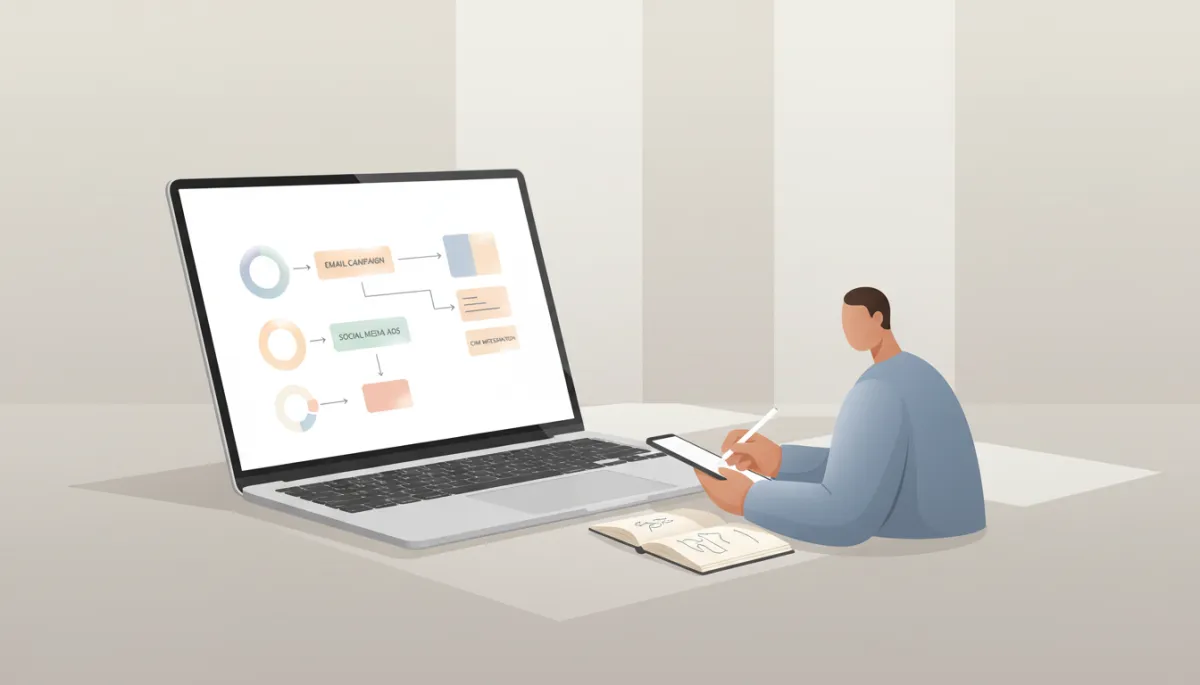
Automated campaigns keep leads engaged while your team focuses on closing deals.
3. Invoicing, Payments, and Basic Accounting
Late or incorrect invoices drain cash flow and create unnecessary back-and-forth with customers. Business process automation in finance is one of the fastest ways to achieve Cost Reduction and improve predictability. Tools like Wave, QuickBooks, and Bill.com can automate:
Recurring invoices for subscription or retainer clients.
Automatic payment reminders before and after due dates.
Bank feed imports and transaction categorization to keep your books up to date.
Combine these with workflow automation platforms like Zapier or Make, and you can for example, create an invoice automatically when a deal moves to “Closed Won” in your CRM, or notify your team in Slack when a large payment lands. This tight integration reduces manual errors, shortens your quote-to-cash cycle, and helps you save time and money on bookkeeping.
4. HR, Payroll, and Employee Onboarding
HR processes are often surprisingly manual in SMEs: paper forms, email chains, and scattered spreadsheets. In 2026, cloud-based HR platforms like Gusto and Breezy HR bring Business Automation to hiring, onboarding, and payroll. You can automate:
Job posting distribution across multiple job boards and social platforms.
Candidate screening, interview scheduling, and follow-up communication with templates and AI scoring.
Payroll calculations, tax filings, and benefits administration with minimal manual intervention.
For new hires, you can build onboarding workflows that automatically send welcome emails, assign training tasks in Asana, and grant access to essential tools. This level of Workflow Optimization ensures a consistent experience for every employee and dramatically reduces administrative overhead for your HR team.
5. Project Management and Internal Collaboration
Missed deadlines and miscommunication often stem from fragmented tools and manual status updates. Project management platforms like Asana, Trello, and Monday.com, combined with cross-platform automation tools, can transform how your team collaborates. Examples of SME Automation here include:
Automatically creating tasks when a new customer signs a contract or submits a support ticket.
Sending reminders or escalating tasks when due dates are approaching or overdue.
Posting status updates to Slack or Microsoft Teams when key milestones are reached.
Over time, AI-driven Automation Trends 2026, such as predictive analytics, will help you anticipate project delays and reallocate resources before issues escalate. This kind of proactive Workflow Optimization is particularly valuable for SMEs with lean teams and tight delivery timelines.
6. Customer Support and Service Requests
Customers expect fast and accurate support often around the clock. For SMEs, staffing a 24/7 helpdesk is rarely realistic, but workflow automation and AI agents can bridge the gap. Tools like Intercom, Zendesk, or AI assistants such as Lindy and Bardeen can:
Automatically triage incoming messages and route them to the right team or knowledge base article.
Provide instant answers to common questions using AI trained on your documentation.
Trigger follow-up surveys or offers after a ticket is resolved to measure satisfaction and encourage repeat business.
According to recent surveys, organizations that combine human agents with AI co-pilots see faster resolution times and fewer errors (PwC, BOC Group). For SMEs, this hybrid “human + machine” model is a practical path to save time and money while still delivering a personal touch.
7. Operations, Inventory, and Back-Office Tasks
Finally, look at your operational backbone: inventory updates, purchase orders, supplier communication, and internal approvals. These repetitive, rules-based activities are perfect candidates for business process automation and RPA. With tools like Microsoft Power Automate, n8n, or entry-level RPA platforms, you can:
Sync inventory levels between your e‑commerce store, warehouse system, and accounting software automatically.
Generate purchase orders when stock falls below a threshold and email suppliers without manual intervention.
Automate internal approvals for expenses or discounts using digital forms, reducing bottlenecks and paper trails.
Process mining an emerging discipline highlighted in 2026 BPA reports is increasingly used to identify where these automations will deliver the biggest Cost Reduction. By analyzing real execution data, you can see which steps are slow, error-prone, or duplicated, then use workflow automation to streamline them.
Best Practices for Implementing Workflow Automation in Your SME
Knowing what to automate is only half the journey. To make Business Automation sustainable, follow a few proven principles drawn from Gartner, Forbes, and TechRepublic’s guidance on Workflow Automation best practices for 2026:
Start simple and clear. Define the objective of each automation in one sentence, such as “Reduce manual data entry for invoices by 80%.”
Integrate with existing tools. Favor platforms that work well with your CRM, ERP, and communication apps to avoid data silos.
Design for people, not just processes. Involve team members early, gather feedback, and ensure interfaces are easy to use on desktop and mobile.
Measure and refine. Track KPIs like hours saved per month, error rates, and customer satisfaction, then tweak automations as you learn.
Prioritize security and governance. Even small businesses must protect customer data and comply with regulations. Choose tools with strong security features and clear audit trails.
📌 Key Takeaway: Treat automation as an ongoing strategy, not a one-off project. Your workflows should evolve as your business and technology do.
Bringing It All Together: A Practical Roadmap for 2026
To recap, the top seven processes to automate in 2026; lead capture, marketing, invoicing, HR, project management, support, and operations offer some of the fastest paths to save time and money in an SME. You do not need to tackle them all at once. Instead, build a simple roadmap:
Phase 1: Quick wins with cross‑platform workflow automation (Zapier, Make, Power Automate) connecting your existing tools.
Phase 2: Deeper Business Automation in finance, HR, and customer support using specialist platforms like Wave, Gusto, and Intercom.
Phase 3: Advanced Workflow Optimization with AI agents, process mining, and RPA for complex, high-volume back-office processes.
As Automation Trends 2026 continue to evolve toward multi-agent orchestration, governance-as-code, and embedded AI in everyday software, the SMEs that win will be those that start building their automation muscle today. By focusing on clear goals, picking the right Time-saving Tools, and continuously refining your workflows, you can achieve sustainable Cost Reduction, happier teams, and customers who feel the difference in every interaction.
The bottom line: Business process automation is no longer about replacing people, it is about giving your team the space and support to do their best work. Start with one process this quarter, learn from it, and let that success fund your next wave of SME Automation. In an increasingly competitive landscape, the businesses that automate thoughtfully will be the ones that grow confidently.
Ready to map your first automation and see results in weeks, not months? Book a free 30‑minute workflow audit with our team today and get a tailored 2026 automation roadmap for your SME.
